Shroom and Gloom Combat Deck
Spend energy, skip block, roast for food, and grow cards instead of waiting on a shop.
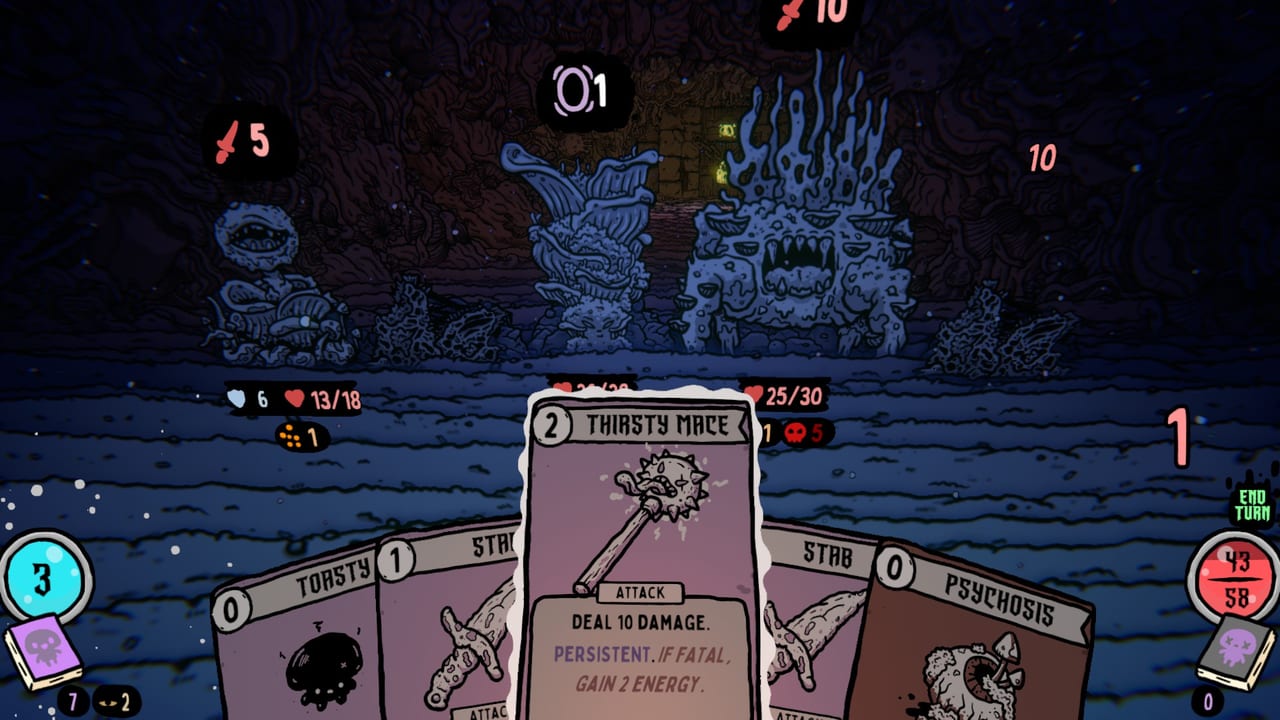
The combat deck is how Shroom and Gloom tries to kill you honestly. Team Lazerbeam built a first-person fight that still plays like a hand of cards: you aim at a mushroom, you spend energy, you accept the hit you did not block. There is no classic block card. Incoming damage is a resource problem, not a failure to find Ironclad-style defend. You live on Headpoints, food, and eating. If that sentence already feels wrong, read How to Eat Enemies before you keep drafting attacks.
This page stays on the fight itself: energy, spell weakness, roasting, moods, and growth. Explore tools that sharpen those fights live on the Explore Deck Guide. The loop that connects both decks is How to Play. Paperboy’s first-hour version is Getting Started.
Energy, not block
A combat turn usually offers a small energy pool, often three. Cards cost energy. Ending the turn lets the pack act. Unspent energy does not become a shield. If you pass with two energy because you were waiting for a perfect lethal, you simply take the swing.
Headpoints are the health resource. Max Headpoints is the real tank stat. Food raises current Headpoints and sometimes the maximum. Eating in combat is how you steal a turn back after a hit. Banking a Toasty for the next room is how you stop treating every pack like a heal check. Bosses punish empty bags harder than they punish a thin attack; see How to Beat Bosses.
Energy refunds exist, but they are conditional. Fatal lines that grant energy, eat triggers, and draw that finds a cheaper follow-up are the replacements for block math. If a card costs 3, assume you are spending the whole turn unless the card says otherwise.
Distant Shadow and spell weakness
Distant Shadow is a named combat card worth learning because it teaches targeting. It costs 3 energy, applies spell weakness, and can become lodged in the target so later plays keep paying that tax. Spell weakness means you can hurt a mushroom by playing cards at its ally. That is not a metaphor. If the left shroom is weakened, finishing the right shroom can still cook the left one.
Do not treat Distant Shadow as an auto-pick in every draft. Three energy is the entire turn for many starter hands. You play it when you can afford to lock a body and then spend cheaper cards into the weakness, or when you plan to grow it through repeat use. The card rankings talk about that kind of system instead of publishing a fake rare chart.
Lodged cards and lingering effects are how the combat deck stays first-person. You are looking at a body with a spell stuck in it. The next stab is still a card, but the room remembers.
Roasting, food, and moods
Roast is a damage card with a culinary rider. If the hit is fatal, you can bank a Toasty. Eating the Toasty recovers Headpoints. Seasoning, skewering, and soup lines are cousins of the same idea: the corpse is a resource. Seasoned is a state you apply so later eats and pots pay extra. None of this replaces the explore deck’s rest; it is the combat half of the same stomach.
Moods such as rage and impatience enter the hand as cards. They take space. They also unlock buffs and special attacks. Concerned Parent leans on this harder than Paperboy does—Parental Instinct creates Hysterical Strength, a temporary mood that adds rage damage onto attacks and grows whenever you draw. That kit is Early Access material for most players; the demo still teaches the mood rule. If a mood is clogging the hand, it is because the game wants you to spend it or to build a draw engine that pays for the clutter. The Characters Guide is the roster version of that sentence.
Paperboy’s Fireballs matter even in a combat article because feeding them restores 2 Headpoints and creates Burning Sensation. Burning Sensation is an explore warmth tool first, but the Headpoints it returns are combat currency. Class lines leak across decks on purpose.
Growing cards
Shroom and Gloom’s boast is infinite growth. A starter stab can become an ugly number if you keep feeding it dummy sessions, eat triggers, and ignite bonuses. The practice dummy is an explore reward that exists to modify combat cards. Take it. Sharpen roast if you need food. Sharpen a big attack if the next biome boss is the problem. The dummy is not a side activity; it is the shop you carry.
Growth is not the same as adding twenty invented upgrades. You will see cards that increase their own damage when you eat, cards that grow max Headpoints when you ignite, and cards that evolve after repeat use. Distant Shadow is one of the latter. If a card says it grows, believe it and stop looking for a replacement name.
The frog statue on the explore side lets you forget a card. That is combat hygiene. A starter that never grew is clutter. A mood you cannot spend is clutter. Forgetting is a weapon.
Hands that survive bosses
A good combat hand in the demo does four jobs: spend energy, create food, apply a lasting tax such as spell weakness or Seasoned, and leave enough Headpoints to walk. If you cannot name which card does which job, the hand is a pile.
Draft toward one playstyle rather than a museum. Roast-and-eat, lodged spells, or draw-and-rage are all legal. Compare them on the build list and the Foresight tier list after you have died enough to care. The deck planner is a scratch pad, not a solved spreadsheet.
The demo’s 26 tunnels will still throw packs at you between dummy rooms. The Demo Walkthrough is the route. This page is the fist. When Early Access arrives on 10 September 2026, The Facility will add a second card pool, and Janitor or Activist lines will change what a combat hand looks like. Until then, Paperboy’s job is to prove you can win a fight without a block card and still have a Toasty in the bag.
If a pack drops you, ask which of the four jobs failed before you blame the art. Energy waste, empty stomach, no lingering tax, or a card that never grew—those are the four autopsies that actually help the next run.
Frequently Asked Questions
Quick answers to the most common Shroom and Gloom questions.
Is there a block card in Shroom and Gloom?
No classic block. You survive with Headpoints, food, and eating. Read How to Eat Enemies if you keep looking for a defend card.
What does Distant Shadow do?
It costs 3 energy, applies spell weakness, and can lodge in the target so later cards keep paying that tax. It is a named example, not a whole database.
How do I make Toasty during a fight?
Land a fatal roast (or a similar cook line). Bank the Toasty and eat it for Headpoints. Timing is on How to Eat Enemies.
How do combat cards actually grow?
Repeat use, eat triggers, ignite bonuses, and the practice dummy. The dummy itself is an explore reward; see the Explore Deck Guide.
What should I draft for bosses?
Energy-efficient damage, a food line, and at least one lingering tax. How to Beat Bosses and the build list cover the rest.