Shroom and Gloom Explore Deck
Open locks, dig tunnel cards, rest on warmth, and decide when The Facility is your path.
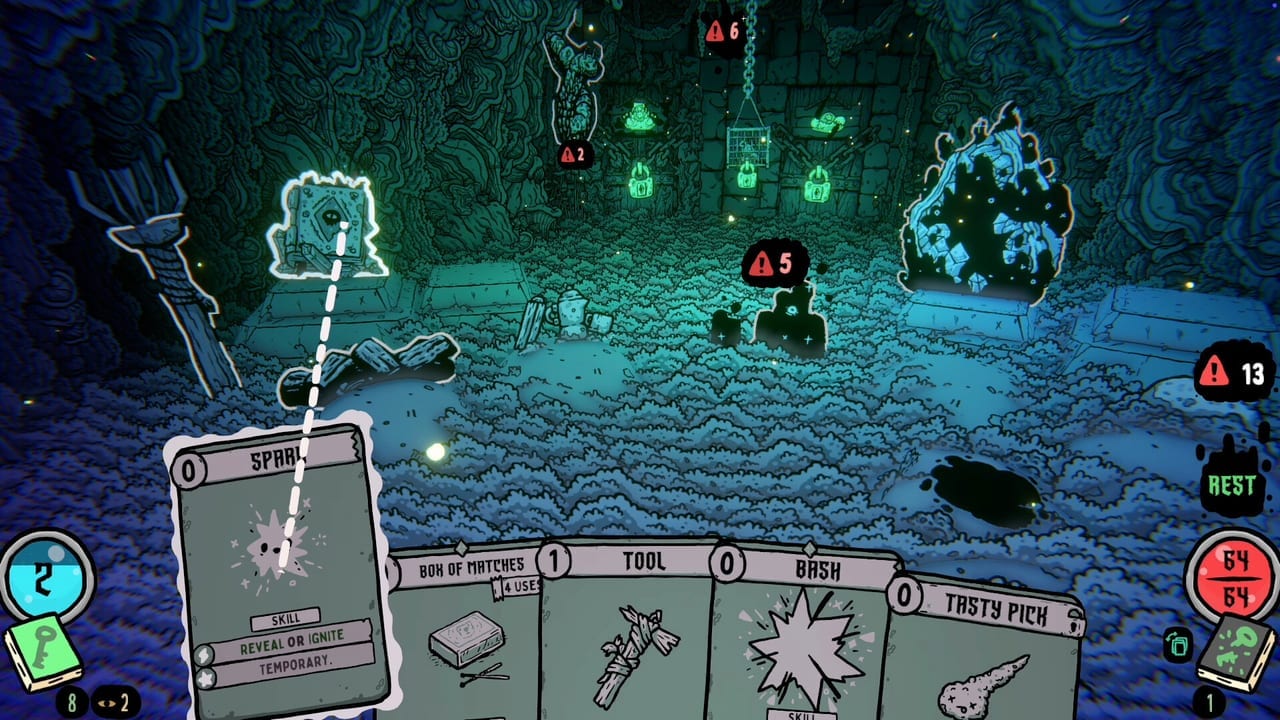
The explore deck is the half of Shroom and Gloom that looks like a walking simulator until a lock asks you to bleed. You are in first person. The cards in your hand are the tools: keys, shovels, maps, rest, camp structures, food, and odd furniture. Team Lazerbeam’s rule still applies. Everything that can be a card should be a card, including the door you would rather headbutt.
This page covers locks, digging, the practice dummy, the frog statue, rest, camp warmth, and The Facility path. Combat math stays on the Combat Deck Guide. The loop that feeds both decks is How to Play. If you have not installed the free demo yet, start with Getting Started and the demo hub.
Locks, keys, and headbutts
Wooden doors, glowing locks, and later digital panels all want a verb. Unlock consumes a key. Headbutt—bash—opens the same lock by spending Headpoints. The tax is real. Early rooms may ask for a few points. Later rooms will ask for more. If you are healthy and you want the key for a shop, a chest, or the mushroom key puzzle at the end of the demo, the bash is a correct greedy play. If you are already one pack away from a biome boss, pay the key.
Handy keys that draw first or persist are better than they look because explore hands clog. A consumed key that was sitting under a shovel you needed is a dead turn. Maps that open the layout are energy you spend so you stop guessing which fork is a Foresight chest.
The mushroom key is not a normal lockpick. It unlocks the Gloom door. Treat it like a finale item. Spending it on a random chest is how a good run becomes a screenshot of a closed gate. How to Beat Bosses and the Demo Walkthrough exist so you do not make that mistake at 2 a.m.
Digging, dummy, and frog statue
Shovels dig. Dig spots are not identical. Mossy, Thorny, and Trippy tunnels can pay tunnel-specific cards. If the prompt says the dirt is unique to that biome, believe it and spend the energy. A second shovel is not always clutter; it is a second chance to miss a fight and still grow the deck.
The practice dummy is an explore reward that exists to modify combat cards. You deploy it, you pick an attack or a roast, you add damage or a rider. Take the dummy when the fight reward offers it unless your combat deck is already a monster and you are starving for rest tools. The dummy is how infinite growth starts looking true instead of like marketing. Pair it with the card rankings only after you have actually sharpened something.
The frog statue—toad shrine in older notes—is the forget button. Licking the toad lets you forget a card. That is how you delete a starter that never grew, a mood you cannot spend, or a key you no longer need. It is not a joke shrine you skip because the art is funny. Forgetting is deckbuilding. If the statue also offers a forget-and-heal or a forget-and-draw line, compare it to rest; sometimes hygiene is worth more than warmth.
Rest, camp, and warmth
Rest restores energy and draws a fresh explore hand. It spends warmth. Warmth is the camp stat that reduces hazard damage and the slow pressure of a room that is getting more dangerous. If the camp is cold, every extra turn is a tax. If the camp is hot, Paperboy’s extra-turn habit becomes the correct line instead of a dare.
Camp structures are explore cards you deploy. Paperboy’s starting campfire adds warmth for the whole exploration phase once it is ignited. Fireballs can be fed: restore 2 Headpoints, create Burning Sensation, and let that temporary card add 10 warmth while it stays in hand. Burning Sensation can also ignite things, including the campfire, which is how a food line becomes a rest line. Other characters will bring other camps. The rule stays: heat is time.
Food in the explore hand is not only a heal. It is currency for shops, bait for eat-growth combat cards, and a way to overheal into max Headpoints when a knitted or similar rider is in play. How to Eat Enemies is the kitchen. This page is the pantry.
The Facility path
Early Access is scheduled for 10 September 2026 with two paths to The Gloom and unique card pools. The Facility is the second path. Developer overviews show metal tunnels, flickering lights, a hazmat corpse, rusted fencing, barrels, and high-tech doors with digital locks that want gunk or a hack instead of a wooden key. Caves still appear, but the modern setting is no longer a rumor.
Janitor is the Facility-facing class the team has teased around gunk, machines, and data. Activist is listed in the Early Access roster of five. Neither kit is the demo starter. Do not invent a full Facility card list here. Speak in systems: new lock verbs, new junk resources, a new pool of explore tools that still feed a combat deck. When those cards are public in the paid build, this page should grow with named examples the same way Distant Shadow is named on the combat side.
Until then, the demo you can play is the cavern route: 26 handcrafted tunnels, 8 Foresights, Paperboy, wooden locks, shovels, dummy, frog statue, rest. The Demo Walkthrough is the route guide. The Characters Guide is who walks it later.
Feeding the combat deck
Explore is not a break from combat. It is how combat gets better. Dummy sessions grow attacks. Food raises Headpoints. Forgetting at the frog statue thins the fight hand. Keys and rest decide whether you arrive at a biome boss with energy or with a headache. Foresight chests are explore objects that change every future fight and every future room.
If your explore deck is all keys and no rest, you will bash yourself to death. If it is all rest and no dummy, your combat numbers stay starter-shaped. Draft like a conversation with the Combat Deck Guide. Use the deck planner to jot which tools you actually played, not which names you wish the demo contained.
A clean explore turn spends energy on one lock, one grow, or one rest—not all three unless warmth and Headpoints say you are rich. Greed is legal. Cold camps are not. When the room starts ticking up danger, you are no longer sightseeing. You are paying rent, and the mushrooms have the lease.
Frequently Asked Questions
Quick answers to the most common Shroom and Gloom questions.
Should I headbutt locks or spend keys?
Headbutt if Headpoints are high and you want the key later. Pay the key before a boss or when the tax is large. The mushroom key is reserved for the Gloom door; see How to Beat Bosses.
What does the practice dummy do?
It is an explore reward that modifies combat cards: extra damage, riders, growth. Pair it with the Combat Deck Guide when you choose what to sharpen.
Is the frog statue worth a stop?
Yes if you need to forget a starter, a dead key, or a mood you cannot spend. Forgetting is deckbuilding, not a joke.
How does camp warmth work?
Warmth reduces hazard damage and room-danger pressure. Rest spends it. Paperboy can feed Fireballs for Burning Sensation and +10 warmth while that card stays in hand.
What is The Facility?
A second path to The Gloom with its own card pool, digital locks, and Facility-facing characters. It is part of the scheduled Early Access split, not the demo's 26 cavern tunnels. See the Characters Guide.
Where do Foresight chests fit?
They are explore objects that grant always-on passives. The demo hides 8 across 26 tunnels. Rankings are on the Foresight tier list.