How to Play Shroom and Gloom
Explore with one deck, fight with the other, and let every reward feed the opposite hand.
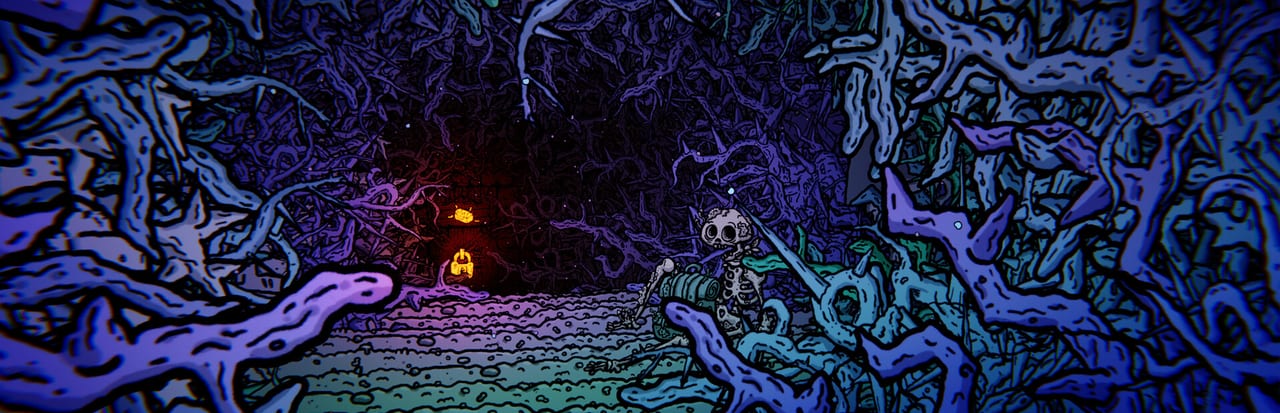
Shroom and Gloom is easier to admire than to explain at a table. It is a first-person dungeon crawler and a roguelike double-deckbuilder at the same time. Team Lazerbeam’s design rule is that everything that can be a card should be a card: shovels, campfires, moods, food, even the spell you lodge in a mushroom. Publisher Devolver Digital is bringing the Steam build to Windows and macOS, with Early Access scheduled for 10 September 2026. The free demo is how you learn the loop before that date.
If you only wanted a checklist, Getting Started is shorter. This page is the loop in depth: explore rooms with the explore deck, fight with the combat deck, then let rewards feed the other deck. Read it once, then keep the Combat Deck Guide and Explore Deck Guide open as references.
The double-deck idea
Most deckbuilders ask you to maintain one pile. Shroom and Gloom asks you to maintain two, and they do not share a discard in a way that lets you pretend they are the same game. The explore deck is how you walk. The combat deck is how you kill. You never stab a locked door with a combat attack, and you never roast a chest. You can headbutt a lock, but that costs Headpoints and lives on the explore side of the rules.
Energy is the shared language. Both phases spend it. A typical turn offers a small pool, often three, then asks you to end the turn and accept whatever the room does next. Unspent energy does not become block. There is no classic block card. Survival is max Headpoints, food in the bag, and eating enemies through roast, season, skewer, or soup. That last sentence is the entire argument of How to Eat Enemies.
Foresight sits above both decks. A Foresight card is an always-on passive, closer to a relic than to a skill you replay. The demo hides 8 of them across 26 handcrafted tunnels. You pick them, you live with them, and a successful demo run lets you keep one for future explorers. Rankings live on the Foresight tier list, but the loop itself does not require a ranking. It requires you to stop treating Foresight like a combat card you forgot to play.
Explore phase
You move in first person down hand-drawn tunnels. The hand at the bottom is the explore deck: keys, shovels, maps, rest, camp structures, food, and weird furniture such as a practice dummy or a frog statue. Playing a card is interacting with the world. Digging a Mossy or Thorny patch is not flavor text; it is how tunnel-specific cards enter your life. Unlocking a door with a key consumes the key. Headbutting the same lock spends Headpoints. Rest spends warmth, restores energy, and redraws.
Camp warmth is the explore safety net. Hazards and rising room danger deal less when the camp is hot. Paperboy’s Fireballs can be fed for 2 Headpoints and Burning Sensation, and Burning Sensation adds 10 warmth while it remains in hand. That is a class lesson, but the warmth rule is universal: if the camp is cold, every extra turn is a tax.
The Facility is a second path toward The Gloom, not a cosmetic skin. Metal tunnels, digital locks, gunk, machines, and data live there. The demo you play today is still the cavern route for most people; The Facility is the Early Access path with its own card pool. Details belong on the Explore Deck Guide and the Characters Guide for Janitor and Activist.
Combat phase
When a pack appears, the game swaps your hand. Combat cards hack, slash, roast, and lodge. Distant Shadow costs 3 energy, applies spell weakness, and can become lodged so later cards keep paying that tax. Moods such as rage and impatience can enter the hand as cards. They clog space, they also enable lines. Growing a card means the printed number is a rumor. Practice dummy sessions, eat triggers, and ignite lines all push values upward instead of replacing the card with a new name.
You will take hits. That is not a misplay by default. Incoming damage is the price of not having block, and the correct response is often to finish a roast, bank a Toasty, and eat after the lethal. If you stall for a perfect turn, the pack will simply hit you again. How to Beat Bosses is the same lesson with a larger health bar.
Named examples you should actually remember: Distant Shadow, Toasty, Seasoned, Burning Sensation, Parental Instinct, and Hysterical Strength. Do not wait for this wiki to publish a hundred invented rares. The card rankings talk in systems for a reason.
How rewards feed the other deck
This is the part people skip, and it is the whole game. Winning a fight rewards explore cards: a dummy, a shovel, a camp structure, a key, a snack. Those cards are how you modify weapons, open the next tunnel, and rest safely. Playing explore cards is how you grow the combat deck: dummy damage, food that raises max Headpoints, ignite lines, forget-a-card rituals at a frog statue.
If you greed only combat rewards, your explore hand becomes a pile of dead keys and no rest. If you greed only explore tools, your combat deck stays at starter numbers and the first biome boss eats you. The loop is a conversation. Every explore card you skip is a combat card you never met. Every sloppy fight is an explore hand you cannot afford later.
Food is the courier between phases. A Toasty made in combat can be eaten later. A sandwich found in explore can save a fight. Shops and odd NPCs may want food the way other games want gold. That is why the eating page treats snacks as currency, not only as heals.
Putting a run together
Start as Paperboy in the free demo. Learn rest, warmth, and one Foresight. Use the Demo Walkthrough when you want the 26-tunnel shape and the mushroom key without inventing a fake map. Use the deck planner when you want to jot a plan, and the build list when you want to compare playstyles instead of copying a loadout that does not exist yet.
Controls are first-person plus clicks. If that combination fights you, fix it on the controls page before you blame the mushrooms. Steam UI is English. The game is single-player. Early Access on 10 September 2026 is scheduled to add the second path, more characters, and larger card pools. None of that changes the loop you are learning today: explore, fight, feed the other deck, eat what you kill.
Treat the two decks as a conversation that never quite ends. If one side of the table goes quiet, the run is already telling you which guide to reopen.
Frequently Asked Questions
Quick answers to the most common Shroom and Gloom questions.
What is a double-deckbuilder in Shroom and Gloom?
You maintain an explore deck for rooms and a combat deck for fights. Rewards from one side feed the other. See the Explore Deck Guide and Combat Deck Guide.
Why are there no block cards?
Survival is Headpoints, food, and eating. Roast, season, skewer, or cook soup instead of shielding. The full argument is on How to Eat Enemies.
Does energy reset between explore and combat?
Each phase spends its own turn pool. Winning a fight does not automatically refill a broken explore plan. Rest is how you redraw; camp warmth is how you afford that rest.
How do Foresight cards fit the loop?
Foresight cards are always-on passives. The demo hides 8 across 26 tunnels. Compare picks on the Foresight tier list after you have found a few.
Where should I go after learning the loop?
Run the Demo Walkthrough, then read How to Beat Bosses before you spend a mushroom key. Install notes stay on the demo hub.