Shroom and Gloom Guides
First-hour habits, both decks, eating, bosses, and the demo route in one place.
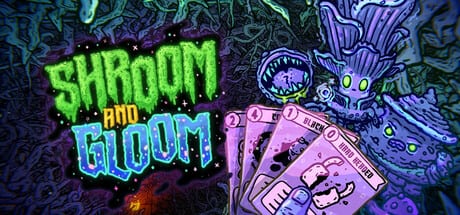
Shroom and Gloom is a first-person roguelike double-deckbuilder from Team Lazerbeam, published by Devolver Digital. Early Access is scheduled for 10 September 2026 on Steam for Windows and macOS. Until that date, the free demo is the build you can play. This hub is the index of every English guide on the wiki: first-hour habits, both decks, eating, bosses, the demo route, characters, and controls.
The design pitch is simple and easy to forget once a mushroom is chewing your face. You build two decks, not one. The combat deck wins fights. The explore deck opens rooms, modifies cards, and decides whether you rest or shove. There are no classic block cards. You live on Headpoints, food, and eating. Cards can grow instead of sitting on a printed number. Moods such as rage and impatience become cards. Foresight cards act like relics: always-on passives you hunt across handcrafted tunnels. Everything that can be a card should be a card.
Start here
If you have not installed anything yet, begin with Getting Started. It covers downloading the demo, meeting Paperboy, spending energy in the first rooms, and knowing when to rest instead of forcing another pack. Pair it with How to Play so the double-deck loop is not a surprise the first time a locked door taxes your Headpoints.
New players should also skim Controls before a long session. The game is first-person and card-based at the same time. Bindings live in the in-game options and may still change before Early Access. Check system requirements if the Unity build stutters, and keep the demo hub open for install notes. Official store and social pointers sit on the links hub.
Combat and exploration
The Combat Deck Guide explains energy, spell weakness, roasting, moods, and infinite growth. Distant Shadow costs 3 energy and applies spell weakness; it is a named example of a lodged spell, not a license to invent a hundred fake rares. If a fight is going badly, that page is the one that tells you why eating beats blocking.
The Explore Deck Guide is the other half of the conversation. Locks, digging, the practice dummy, the frog statue, rest, camp warmth, and The Facility path all live there. Winning a fight feeds new explore cards. Playing explore cards modifies weapons, opens routes, and sets up the next combat hand. Use How to Play when you need both phases in one sitting, then jump back into the deck pages when a specific tool is confusing.
If you want a planning board rather than prose, the deck planner sits under tools. Rankings for systems—not a fake rarity catalog—live on the tier list hub, with splits for cards, builds, and Foresight.
Eating, bosses, and the demo
Healing is culinary. How to Eat Enemies covers roast, season, skewer, soup, Toasty, Seasoned, and why food is both a heal and a currency. That is the page to open when you keep dying with a full hand and an empty stomach.
How to Beat Bosses is for biome bosses and the demo finale. Stack Headpoints, bank food, and do not spend the mushroom key like a normal lockpick. The Gloom door is the point of the demo route, not a side chest.
For a run-shaped mindset rather than a spoiler dump of invented encounters, use the Demo Walkthrough. The current demo is 26 handcrafted tunnels with 8 hidden Foresight rewards. Paperboy is the starter. Lunchlady appears as an unlock teaser and stays locked in the demo. If you only have one evening, that walkthrough plus Getting Started is enough.
Characters, dates, and the rest of the wiki
The Characters Guide covers Paperboy, Concerned Parent (Parental Instinct and Hysterical Strength), Lunchlady, Janitor, and Activist. Some of those kits are Early Access only. The demo is a Paperboy classroom. Early Access is scheduled to open two paths to The Gloom with unique card pools; compare them on the Pathways Guide. The Facility is one of those paths. The map guide is the 26-tunnel overlay. Honest demo impressions sit on the demo review.
News and dates live under updates: Early Access plans, demo notes, and news. This wiki is English-first for the Steam UI. Simplified Chinese has been announced as a future localization, not as a language that ships on the current Steam list. Shroom and Gloom is single-player. There is no multiplayer mode to wait on.
When a mechanic stops making sense mid-run, jump back to this hub instead of restarting blind. The child pages are ordered the way a Paperboy actually learns the tunnels: install, loop, combat, explore, eat, bosses, demo route, roster, then the buttons that move your hands.
Frequently Asked Questions
Quick answers to the most common Shroom and Gloom questions.
Which Shroom and Gloom guide should I read first?
Install the free demo, then read Getting Started and How to Play. Add Controls if the first-person hand feels awkward.
Is the full game already playable as a paid launch?
No. Early Access is scheduled for 10 September 2026 on Steam. The free demo is the build you can play today. See Early Access plans.
Do I need both the combat deck and the explore deck pages?
Yes. Rewards from fights feed the explore deck, and explore tools grow the combat deck. Start with How to Play, then the Combat Deck Guide and Explore Deck Guide.
Where do eating, bosses, and the demo route live?
Use How to Eat Enemies, How to Beat Bosses, and the Demo Walkthrough. Rankings sit on the tier list hub.
Which characters are in the demo versus Early Access?
Paperboy is the demo starter. Concerned Parent, Lunchlady, Janitor, and Activist are part of the scheduled Early Access roster. Details are on the Characters Guide.